The Arts Belong in the Wellness Conversation
Thank you to the Gazette for publishing this on June 10, 2026. See article online here, or read below.
When we think about wellness, most of us think about exercise, nutrition, and sleep. We might think about annual checkups, mental health or spending time outdoors.
We probably don’t think about attending a concert, visiting a museum, or participating in a cultural festival.
But perhaps we should.
A recently released study by researchers at University College London found that people who regularly engage with arts and cultural activities experience slower biological aging than those who do not. The findings, reported by NPR in May, suggest that the benefits of arts engagement may be comparable to those associated with physical activity.
This study is just the latest addition to a growing field of research examining the relationship between arts participation and health. In her new book, Art Cure: The Science of How the Arts Transform Our Health, researcher Daisy Fancourt explores decades of evidence linking arts participation to lower stress, improved mental health, stronger social connections and overall well-being.
The science case is strong enough that in the past several years, medical professionals across the United States have begun offering “social prescriptions” that include the arts. Social prescribing is a healthcare model where medical professionals formally refer patients to non-clinical, community-based activities—such as music classes, nature walks, or volunteer work —to improve physical and mental health
For those of us who work in the creative sector, these scientific studies explain something powerful that many people have experienced firsthand.
Think about the last time you enjoyed live music in the park, laughed at a stand up comic, or celebrated at a community festival. The science says that you probably left feeling inspired, connected, even a little more present than when you arrived.
The arts provide much more than entertainment.
The arts invite us to engage emotionally, intellectually and socially. They encourage curiosity. They create opportunities for reflection. Perhaps most importantly, they bring people together.
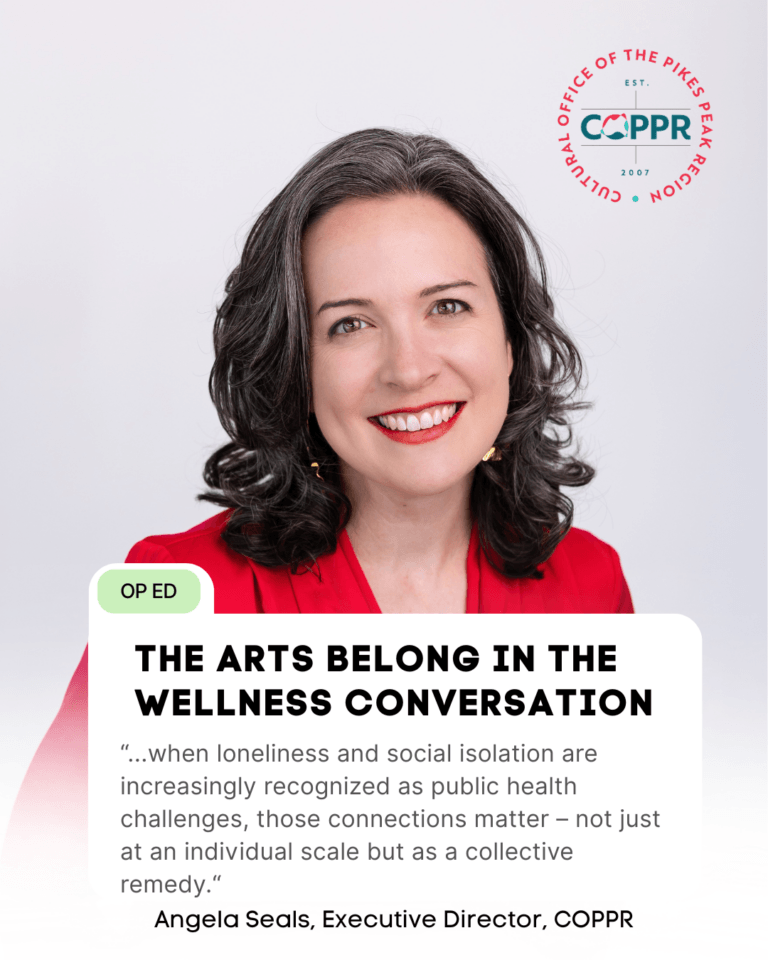
At a time when loneliness and social isolation are increasingly recognized as public health challenges, those connections matter – not just at an individual scale but as a collective remedy.
Every day throughout the Pikes Peak region, people gather for live shows, exhibits, workshops, and community celebrations. While each experience is unique, they share something important in common: they bring individuals together, across differences, to form community memories.
Together, they create a stronger, more connected, and HEALTHIER Pikes Peak region.
Of course, no one is suggesting that attending a concert should replace your next workout or doctor’s visit. But if we’re serious about building healthier, more connected lives and neighborhoods, perhaps it’s time to recognize that arts and cultural experiences have earned their place as valuable investments in our health.
We’re fortunate to have a vibrant arts and cultural scene right outside our doors, one actively engaging children, youth, adults, and seniors every day. So whether it’s enjoying date night at a local theater, exploring the new Arts on the Streets downtown, or experiencing a local festival this summer, answer their invitation: show up, engage and experience the many benefits for yourself.
Angela Seals is Executive Director of the Cultural Office of the Pikes Peak Region, the designated local arts agency serving El Paso and Teller counties. She is a longtime advocate for arts, culture and creative industries as drivers of community vitality and quality of life.